The most expensive lesson in music is the one nobody tells you at the start: gear does not make records. Every producer with a decade behind them has a story about the pedal, the preamp or the plug-in bundle that was going to change everything and instead sat in a drawer. Meanwhile the tracks that actually landed were made on whatever was to hand, in a bedroom, at two in the morning, by someone who had stopped shopping and started finishing songs.
That is worth saying plainly before any discussion of a home studio setup, because the gap between what you need and what you are being sold is enormous, and the industry has every incentive to keep it that way.
The four things you cannot skip
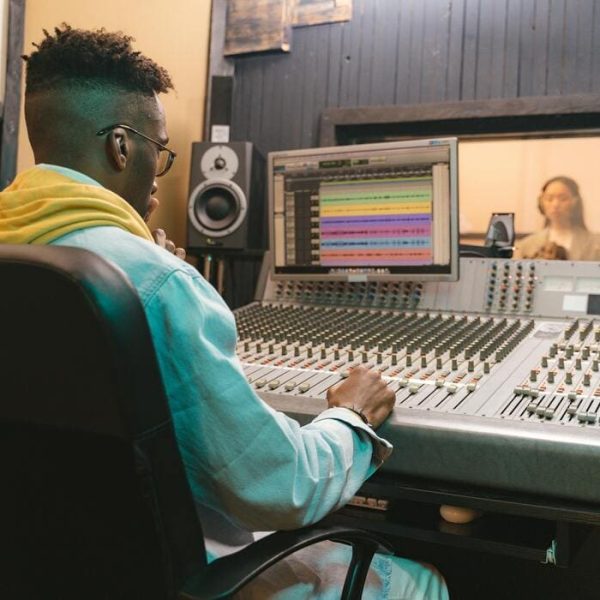
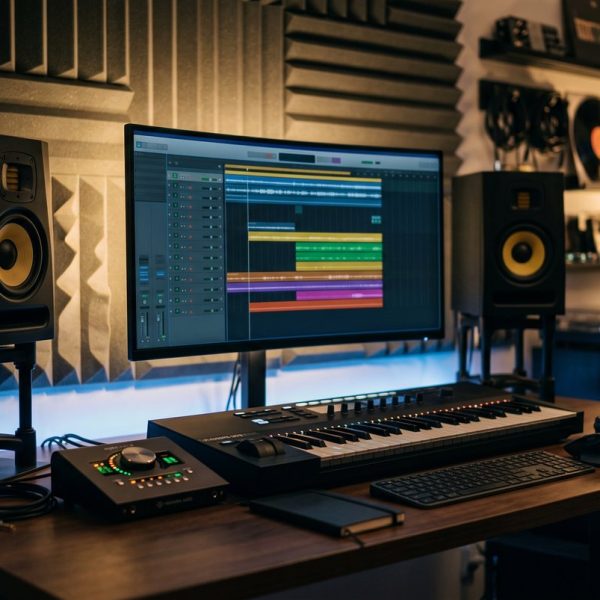
Strip it back and a functioning room needs four things. A computer you already own is almost certainly good enough. A digital audio workstation, and here the honest advice is that they are all capable, so pick one and stop reading comparisons. An audio interface, which is the box that gets sound in and out of the machine, and a decent entry level unit will not be the weak link in your chain for years. And something to listen on.
That last one is where the money actually belongs. If you cannot hear the record accurately, every decision you make afterwards is a guess. Good monitoring is the difference between a mix that translates to a car stereo and one that falls apart the moment it leaves your room. This is the point at which spending real money on the best headphones for music production you can afford is not gear acquisition, it is buying yourself the ability to make correct decisions.
The room is a piece of equipment
Producers routinely spend two thousand on monitors and put them in an untreated square bedroom with a bed behind them and a window to the left. The room then adds a hundred decisions worth of colouration to everything they hear, and they mix against it without knowing.
You do not need a studio build. You need to kill the worst reflections. Put something absorbent on the wall behind the speakers and at the first reflection points to your left and right, get the speakers off the desk and away from the corners, and position yourself so you form a rough equilateral triangle with them. Heavy curtains, a bookshelf full of books and a thick rug will get you most of the way for the price of one plug-in.
What a producer actually does
There is a persistent confusion about the job, and it is worth clearing up, because it shapes what you should be practising. What is music production, really? It is not knob twiddling. It is decision making about arrangement, performance, sound and structure, in service of a song. The producer decides what the record is trying to be and removes everything that gets in the way.
The historic role, as documented in the long lineage of the record producer, runs from George Martin arranging strings to Dr Dre spending three weeks on a snare. The tools change wildly. The job does not. If you spend your first year learning compression and your second learning arrangement, you have done it in the wrong order.
A home studio setup teaches quickly that audio quality carries more of the audience's attention than picture quality ever does. That lesson sits at the centre of how stories are now produced for screens of every size. This work in digital storytelling shows those production choices being made deliberately rather than by default.
Mixing and mastering are not the same thing
Beginners collapse these two into one blurry idea and then wonder why their tracks sound quiet and small. Mixing is balancing the parts against each other, in the room, with a view of the whole. Mastering is the final pass on the finished stereo file, setting level, tonal balance and consistency across a release so it holds up next to commercial records.
Learning mixing and mastering properly takes years, and the honest shortcut for a new producer is this: mix as well as you can, then pay someone with fresh ears and a treated room to master it. The cost is modest and the improvement is usually more dramatic than anything another plug-in will buy you. Reference constantly. Load a commercial track you admire into your session, level match it, and switch back and forth. It is brutal and it is the fastest teacher there is.
Finish things, and then finish more things
Nothing improves a producer faster than completing records. Not perfecting one for eight months, but finishing forty. Each one teaches you where your instincts fail, and only a finished track exposes the weakness in an arrangement that a loop can hide forever.
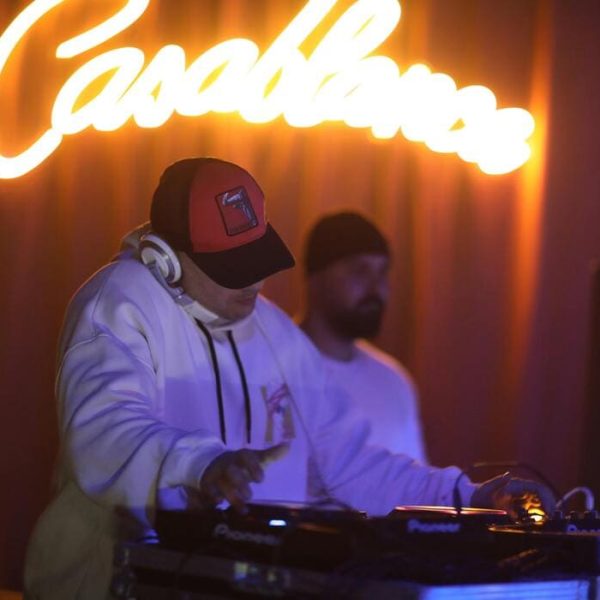
Set a deadline that has some social weight to it. Promise a rapper a beat by Friday. Enter something. Put a track out. Communities such as the r/WeAreTheMusicMakers forum are full of producers who will critique honestly if you ask, and an outside ear at the right moment is worth more than a month of solo tinkering. Even something as simple as showing up where the music is, whether that is a session, a showcase or a festival where you have thought harder about the mix than the music festival outfit, puts you in rooms where collaborations start.
Protect the work before it travels
One last thing, and it is the part nobody enjoys. The moment your music starts moving across borders, through a sync deal, an overseas collaborator or a label in another territory, the paperwork stops being an afterthought. Splits, ownership and clearances all need to be written down, in a language every party actually understands, and misunderstandings here have ended more partnerships than creative differences ever did. The practicalities of IP protection in multi-language partnerships are worth reading about long before you need them.
Get the four essentials, treat the room, learn to hear, and then spend the rest of your energy on the only thing that has ever mattered, which is finishing music that says something.